
A featured contribution from Leadership Perspectives: a curated forum reserved for leaders nominated by our subscribers and vetted by the Manage HR Advisory Board.

Swickard Automotive Group
Your Business Metrics Are Lying to You
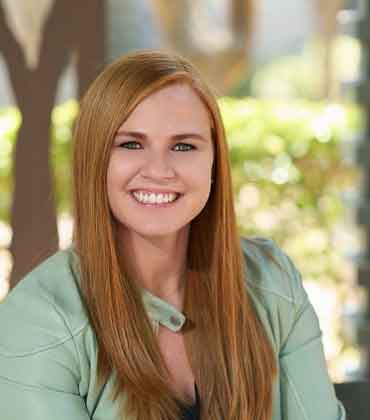
Brittney Boyack
Your metrics are lying, not because they're wrong, but because they're late.
Pick any operational KPI or metric on a financial statement. It is a confession. It tells you what already happened. By the time a metric moves, the decisions that caused it are ninety days old, and the people who made them have already moved on to the next quarter.
We build entire leadership meetings around these numbers. We put them on dashboards. We color-code them. We ask people to explain them. And in most companies, the conversation ends right there, at the output, with almost no airtime given to the inputs that actually produced it.
That's the problem. And I'd argue it's ours to solve.
We Won the Seat at the Table. It's Time to Use It.
I've sat through and been on more panels over the years about earning a seat at the table than I can count and I think we're past it. We won that argument. HR is in the room. The seat isn't the achievement anymore; what gets discussed from it is.
Here's what I notice in those rooms: We spend the hour performing an autopsy. Why did gross soften in the Northwest? Why did that store miss? Everybody has a theory; most of them are about the market and almost nobody asks the question underneath it: What changed about the people, the structure or the standards ninety days before the number moved?
That question belongs to HR. Nobody else is positioned to answer it.
The Inputs Are Just as Measurable as Outputs.
I came up in hospitality, where the service profit chain wasn't a poster in a break room; it was the operating model. Take care of the employees, they take care of the guest, that drives profit. Simple enough that it sounds obvious and hard enough that most companies never actually run it.
The knock on that model has always been that it's “soft.” It isn't. Every link in it can be measured.
On the employee side: turnover and specifically where in tenure it happens, because thirty-day attrition and three-year attrition are two entirely different diagnoses. Manager respect. Workplace respect. Job fulfilment. Whether a person can articulate, without help, what they're accountable for delivering in their role.
On the customer side: stated experience through surveys, observed experience through behavior, repeat rate, referral rate, loyalty.
“HR doesn’t create the dollars on the financial statement. What we do is determine whether those dollars get made.”
Not one of those shows up on a financial statement. Most investors don't ask about a single one of them. And they are the closest thing we have to a leading indicator of whether the numbers on that statement happen at all.
This Isn't a Hospitality Argument. It's an Every-Strategy Argument.
This applies not just to companies that sell an experience. It is every business, in every sector. The inputs change depending on your strategy. The dependency on them to tell the full story doesn't.
• If you're differentiating on service, internal service culture is the precondition for external service culture. You cannot ask a frontline team to deliver warmth that doesn't exist behind them. It shows up in the interaction every time.
• If you're squeezing margin, labor is your largest controllable expense, which makes optimizing it a talent-profile question before it's ever a cost question. The right number of the right people, deployed at their highest and best use. Cut without that analysis and you don't reduce expense; you relocate it into turnover, overtime, frustration and rework.
• If you're running steady and just hitting shareholder guidance, predictability is a people problem too. Nothing puts a forecast at risk faster than unplanned turnover in the roles that carry the revenue.
Three completely different strategies. Three completely different input targets. All three run entirely on inputs that HR owns.
Yes, You Still Have to Run the HR Machine.
Policy, compliance, consistency, standards, you can't build talent, succession or growth on a broken foundation. But most of us are past that. Staying there is a choice now, not a constraint.
The Next Frontier Isn't the Table. It's the People Architecture.
HR doesn't create the dollars on the financial statement. What we do is determine whether those dollars get made.
The structure of the organization. The number of people and where they sit. Whether a manager knows how to lead or just how to schedule. Whether a job becomes a ten-year career or a nine-month stop. Every one of those is an input, every one of them is measurable and every one of them lands downstream in a number somebody else will take credit for.
We have the seat. The work now is owning the architecture behind it, because the metrics everyone is staring at will keep telling you what happened and they will never once tell you why.
The articles from these contributors are based on their personal expertise and viewpoints, and do not necessarily reflect the opinions of their employers or affiliated organizations.

Be first to read the latest tech news, Industry Leader's Insights, and CIO interviews of medium and large enterprises exclusively from Manage HR Magazine
